Implementing AI-driven route optimization can reduce fleet accident rates by up to 20% while cutting fuel costs.
In 2026, fleet safety is no longer just about hiring good drivers; it is about giving them the right tools to survive on increasingly crowded roads. According to the National Highway Traffic Safety Administration (NHTSA), while traffic fatalities saw an encouraging 8.2% decline in the first half of 2025, the pressure on commercial fleets to maintain this downward trend is higher than ever.
Every mile your drivers travel carries an inherent risk. But what if you could eliminate the riskiest miles before the engine even starts? That is the power of strategic route planning. In this guide, we will explore how shifting from “shortest route” to “safest route” can protect your drivers, lower your insurance premiums, and protect your bottom line.
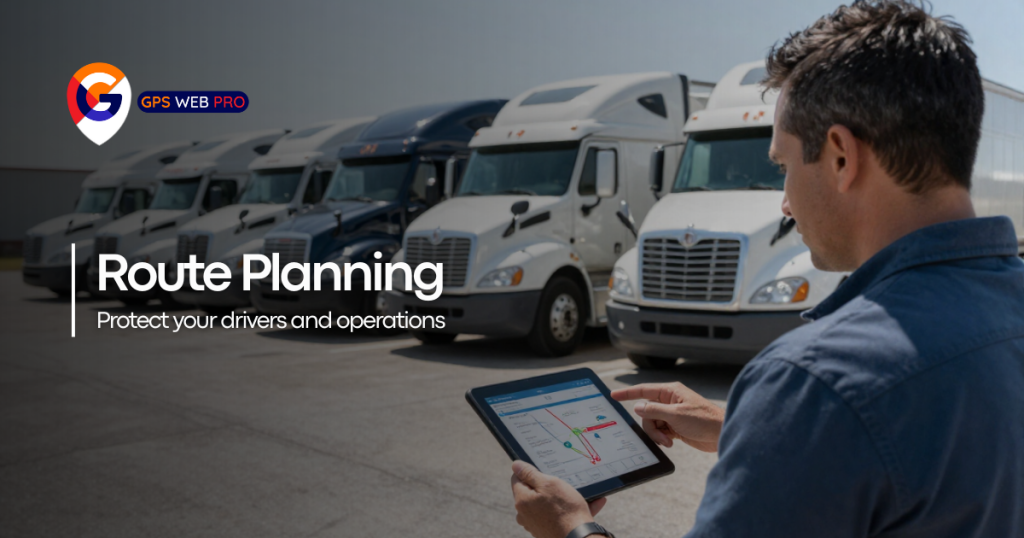
The Hidden Dangers of Inefficient Routing
Many fleet managers still rely on basic GPS navigation that prioritizes speed above all else. However, the “fastest” route often exposes drivers to unnecessary hazards, such as difficult intersections, school zones, or high-crime areas.
The “No Left Turn” Policy
One of the simplest yet most effective safety strategies is minimizing left turns. Crossing oncoming traffic is one of the leading causes of intersection accidents. By optimizing routes to favor right-hand turns, you not only reduce idling time but significantly lower the chance of severe side-impact collisions.
Avoiding High-Risk Zones
Modern route planning software doesn’t just look at distance; it looks at data. It can reroute drivers around areas known for high accident frequencies or severe weather conditions. According to recent data from the Federal Highway Administration (FHWA), weather-related events are responsible for over 20% of all roadway crashes. Dynamic routing allows you to steer clear of these dangers in real-time.
Combating Driver Fatigue with Smart Scheduling
Driver fatigue remains a top concern for the Federal Motor Carrier Safety Administration (FMCSA). When a route is poorly planned, it often leads to rushed deliveries and missed breaks.
How intelligent routing helps:
- Realistic ETAs: AI algorithms calculate traffic and dwell time, ensuring schedules are achievable without speeding.
- Automated Break Planning: Routes can automatically factor in mandatory HOS (Hours of Service) breaks at safe, designated rest stops, ensuring compliance and rest.
- Reduced Stress: When drivers know their route is optimized for traffic and safety, their cognitive load decreases, allowing them to focus better on the road.
The Role of AI and Real-Time Telematics
In 2026, we aren’t just reacting to accidents; we are predicting them. Integrating Video Intelligence with route planning closes the safety loop.
According to the Insurance Institute for Highway Safety (IIHS), trucks equipped with forward collision warning systems have 41-44% fewer rear-end crashes. When you combine this technology with optimized routing, you create a safety ecosystem where the vehicle actively helps the driver avoid danger.
How GPSWEBPRO Integrates Safety into Your Operations
At GPSWEBPRO, we understand that safety is a 24/7 commitment. Our solutions are designed to work seamlessly to reduce risk at every turn.
- AI Dash Cams & Video Intelligence: Our systems don’t just record; they alert. From lane departure warnings to following distance alerts, we provide real-time coaching to drivers.
- Advanced Route Tracking: Monitor your fleet in real-time to ensure they are sticking to the safest paths and adjust instantly if conditions change.
- HOS / ELD Compliance: Keep your drivers legal and rested with our user-friendly Electronic Logging Devices, ensuring fatigue never becomes a liability.
- Insurance Partnership (QEO): Leveraging our technology can even help stabilize your insurance rates by proving your fleet’s commitment to safety.
Conclusion
Reducing accident risks isn’t about luck; it is about preparation. By combining better route planning with advanced telematics, you are doing more than saving fuel; you are saving lives. As we move through 2026, the fleets that prioritize safety data will be the ones that thrive.
Protect your fleet, protect your future.
Ready to make your routes safer?
Don’t wait for an accident to happen. Contact GPSWEBPRO today to schedule a demo of our AI-driven safety solutions.
Frequently Asked Questions (FAQs)
Q: Can route planning software really reduce insurance costs? A: Yes! Many insurance providers offer lower premiums to fleets that utilize telematics and safety-focused route planning because it significantly lowers the risk of claims.
Q: How does GPSWEBPRO help with driver fatigue? A: Our HOS/ELD solutions ensure drivers take their legally required breaks, while our tracking system helps dispatchers create realistic schedules that don’t force drivers to rush.