Data Orchestration: How Telematics-ERP Integration Automates B2B Cash Flow
According to 2026 logistics financial reports, fleets that synchronize real-time vehicle data with their accounting software reduce billing disputes by 30% and shorten the "Order-to-Cash" cycle from weeks to hours.
For U.S. fleet owners in 2026, the competitive landscape has shifted. It’s no longer just about moving freight from point A to point B; it’s about how fast the data from that movement turns into capital. Traditional manual entry and delayed reporting are more than just administrative nuisances, they are “cash flow killers” that keep your revenue locked in paperwork while fuel and maintenance costs continue to rise.
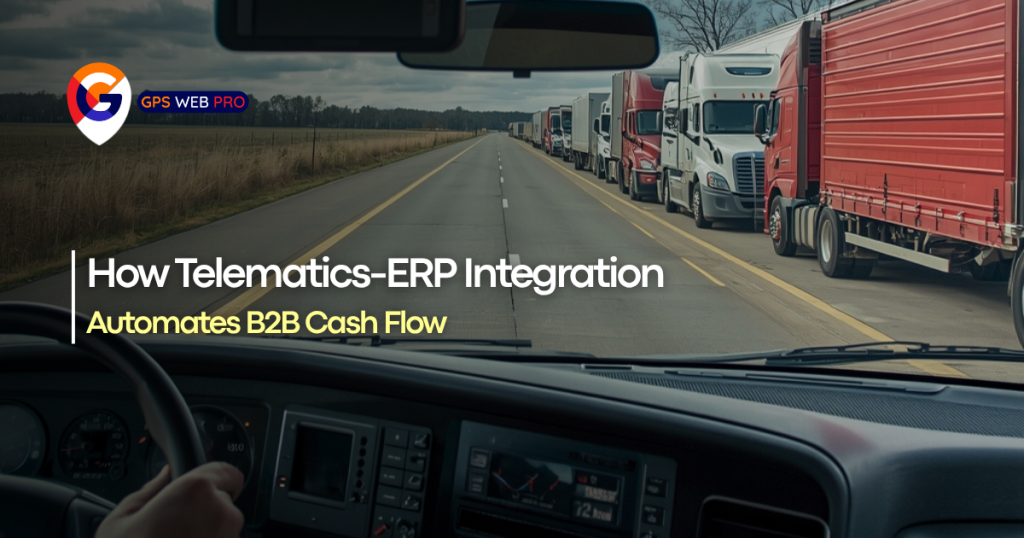
The solution lies in Data Orchestration. This is the seamless communication between your fleet telematics (GPS, engine diagnostics, and driver behavior) and your Enterprise Resource Planning (ERP) system. In this guide, we will explore how this integration transforms raw operational data into a streamlined financial engine, providing you with the liquidity needed to scale in a volatile market.
1. What is Data Orchestration in Modern Trucking?
In the past, telematics was a siloed tool used by dispatchers to see truck locations. Today, orchestration means that a “Delivery Completed” signal from a truck doesn’t just sit in a GPS portal, it automatically triggers an invoice in your accounting software.
The Death of Information Silos
According to the National Institute of Standards and Technology (NIST), interoperability is the cornerstone of the modern American supply chain. When your fleet’s “field data” (telematics) speaks the same language as your “office data” (ERP), you eliminate the human errors that typically lead to payment delays.
2. Accelerating B2B Cash Flow: The Telematics-ERP Bridge
The primary friction point in B2B trucking is the time gap between service delivery and payment. Orchestration bridges this gap through three key automation triggers:
Automated Electronic Proof of Delivery (ePOD)
Instead of waiting for a driver to return to the yard with a signed BOL, GPS-validated geofencing confirms the delivery.
- The Result: The ERP generates an invoice the second the truck leaves the customer’s yard.
- Stat: Data from the U.S. Department of Commerce indicates that digitalizing logistics workflows can improve operational cash flow by up to 15% by reducing administrative lag.
Real-Time Fuel and Maintenance Reconciliation
By integrating engine diagnostics with your ERP’s accounts payable:
- Fuel transactions are automatically cross-referenced with GPS locations to prevent fraud.
- Preventative maintenance is scheduled based on actual mileage, preventing costly “emergency” repairs that disrupt your budget.
3. Strategic Advantages for Fleet Owners
Integrating a robust platform like GPSWEBPRO with your back-office systems provides more than just speed; it provides clarity.
- Precise Job Costing: You no longer have to guess your margins. By combining real-time fuel burn, driver hours, and tolls into your ERP, you see the exact profitability of every load.
- Enhanced Compliance: According to the Federal Motor Carrier Safety Administration (FMCSA), maintaining accurate electronic records is vital for safety ratings. Automated data flow ensures your ELD data and payroll are always in sync, reducing the risk of costly audits.
- Scalability: Automated systems allow you to double your fleet size without doubling your office staff.
4. Overcoming Implementation Hurdles
Many owners fear that “integration” means a year-long IT project. However, the 2026 landscape is dominated by RESTful APIs, simple software “plugs” that allow platforms to talk to each other with minimal coding.
“The shift toward open API architecture in transportation has lowered the barrier to entry for small-to-mid-sized fleets, allowing them to compete with industry giants on an efficiency basis,” according to recent digital transformation studies in the logistics sector.
5. The Digital Ledger of the Road
The future of trucking isn’t just about better engines; it’s about better data. By orchestrating the flow of information between your vehicles and your financial systems, you turn your fleet from a cost center into a high-speed data asset. In a B2B environment where “cash is king,” the ability to automate your cash flow through telematics-ERP integration is no longer an option, it’s a survival requirement.
Mastering Your Revenue Stream
By closing the gap between the road and the ledger, you ensure that every mile driven is a mile accounted for, invoiced, and paid.
Ready to modernize your operations? Don’t let your revenue get stuck in the slow lane. Start by auditing your current “Order-to-Cash” time and see where manual data entry is slowing you down. For more insights on the latest in fleet intelligence, explore our technical resources here.